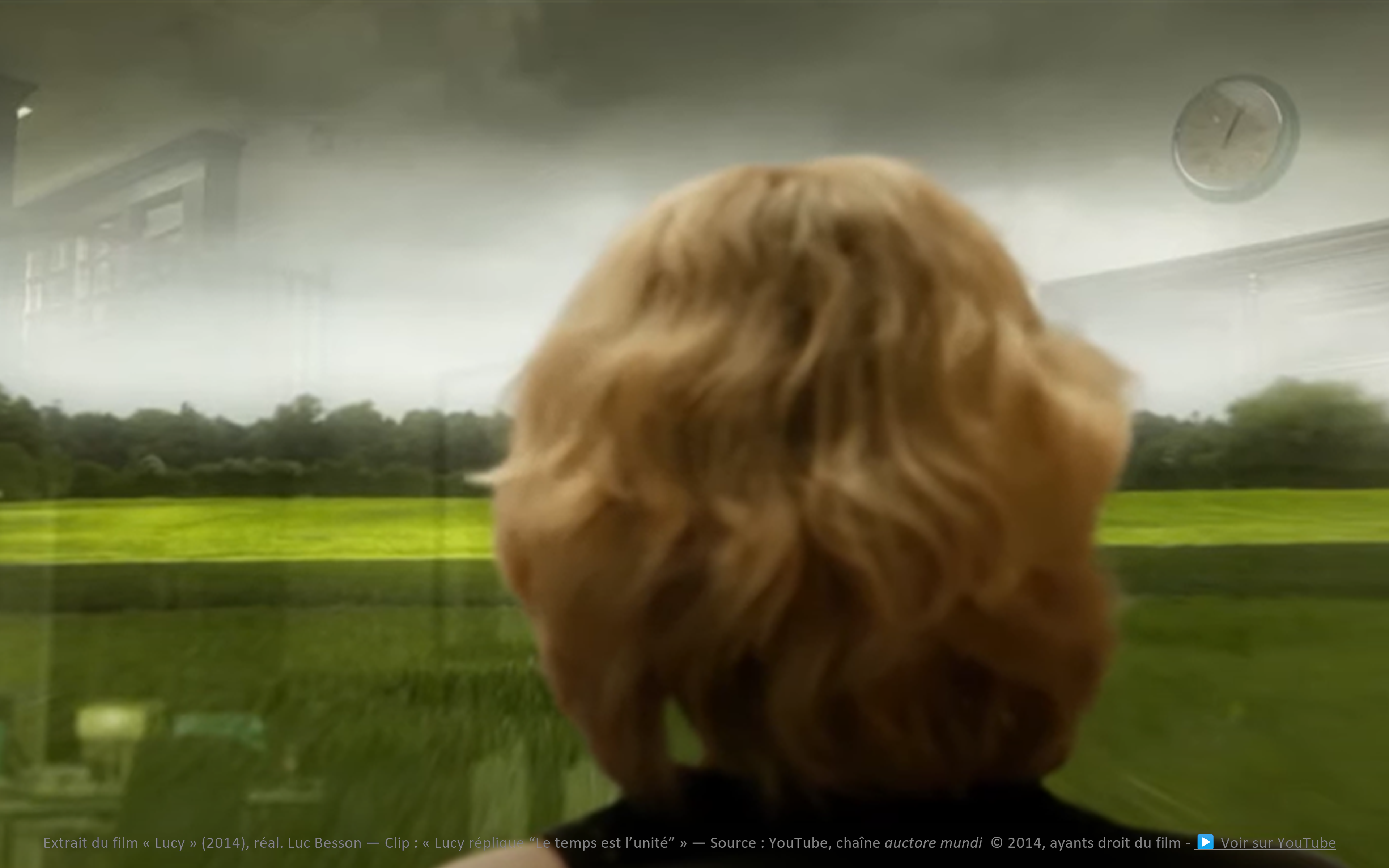
This essay extends a reflection presented in the talk “Seeing Time”, delivered by Marie-Ikram Bouhlel, founder and managing director of the studio, at the Materials & Light conference in Paris in September 2025.
An often-overlooked dimension
In contemporary lighting design practice, many decisions are guided by measurable parameters: illuminance levels, energy efficiency, system performance, compliance, maintenance, cost or visual impact. These aspects are essential. Yet one fundamental dimension of light often remains underexplored: time.
Light does not exist only in the instant. It reveals itself, transforms, fades and returns. It follows or creates rhythms. It interacts with human presence, with uses and with the memory of a place. From this perspective, designing with light does not only mean defining an intensity, a colour temperature or a photometric distribution. It also means working with duration, rhythm, succession and sometimes even with anticipation.
This attention to time does not arise from an abstract theory detached from reality. It emerges very concretely from practice, in diverse architectural and urban contexts, in Paris as well as internationally. It appears whenever one observes a simple fact: a place is never perceived all at once, and the night cannot be grasped like a photograph.
Perceiving in time
The perception of light brings the body into a gradual relationship with space. The gaze adjusts, attention shifts, certain forms emerge while others recede. A façade, a square, an interior or a nocturnal landscape does not reveal itself immediately. It unfolds through fragments, movement, distance and duration.
Night makes this dimension particularly perceptible. The human eye does not receive visual information instantly. It requires time to adapt, to distinguish contrasts, stabilise vision and understand volumes. This natural slowness of perception is often overlooked when immediate legibility and constant intensity are prioritised.
Yet this perceptual temporality is a valuable resource for the lighting designer. When a project allows for shadows, when it accepts that certain elements may reveal themselves progressively rather than being immediately highlighted, space gains a particular depth. The gaze becomes active. The body participates in discovering the place, adapts to it, synchronises with it and perceives. The experience ceases to be a simple visual consumption. It becomes sensory, spatial and lasting.
In such conditions, light does not merely illuminate an architectural object. It organises a dynamic relationship between the observer and space. The movement of the body, the direction of the gaze and the duration of presence continuously modify what is perceived. Lighting is no longer a fixed image, but an open situation.
Visible time
In lighting design, time may appear in the form of animation or programmed effects, but not necessarily. It can be far more discreet. It can also emerge in the way light reveals a space, through the succession of perceptual planes, the hierarchy of intensities and chroma, and the balance between shadows and light. It can also reside in a more invisible layer: that of metaphor and symbolism.
One could speak here of a visible time. Not the time measured by a clock, but a time perceptible through the experience of a place itself.
This dimension appears when architecture seems to enter into dialogue with the users of urban space, sharing their nocturnal rhythms, their moments of celebration or simply inviting them to slow down and interact.
It also emerges when the eye gradually discovers the relief of a façade, when delicate shadows selectively reveal architectural materiality, or when light accompanies movement and offers the body progressive spatial cues. The luminous scene is no longer reduced to a static nocturnal image. It becomes a sequence composed of successive moments.
The challenge is to inscribe architecture within a perceptible duration, definitely singular for each individual yet shared collectively through the experience of place.
In certain projects, this approach can restore legibility in environments saturated with visual information. When everything is immediately visible with the same intensity, the eye becomes fatigued and attention scatters. Introducing time into perception allows instead for hierarchy, spatial breathing, pauses for the gaze and subtle interactions with the surrounding environment.
Working with time does not necessarily mean adding complexity. It often means seeking precision, reducing the unnecessary and accepting that a place may reveal itself progressively.
Time as a design parameter
Designing with time means considering temporality as a project parameter in its own right, just like light levels, colour, contrast, materiality, direction of light, glare, maintenance or energy consumption.
This approach can take different forms.
Rhythm and sequence
Some spaces call for sequential reading. The body moves through, approaches, withdraws and pauses. Light can accompany these transitions, structure progression, modulate perceived distance, prepare thresholds or reinforce orientation.
Duration and adaptation
Rather than seeking maximum immediate visibility, it becomes possible to embrace the eye’s adaptation and creates atmospheres that reveal and gain richness over time.
Expectation and revelation
Certain architectural details do not benefit from being displayed immediately. They benefit from being encountered. When light reveals with restraint, it gives the place a sense of mystery and memory. The visitor becomes a discoverer. The space ceases to be décor and becomes experience.
Temporalities of use
A space does not live the same way according to the hour, the season, the density of use or events. Designing with time also means listening to these temporalities and anticipating modes of operation capable of accompanying the lived reality of a place.
Space for imagination
Designing with time may also mean accepting moments of breathing within light. A building does not necessarily need to be illuminated permanently. It may appear cyclically, enter into dialogue with its urban environment, then return to a quieter presence until the next cycle.
Such an approach also requires imagining systems capable of evolving over time, of being adjusted, transformed or reinterpreted by other designers. Light then ceases to be a fixed state and becomes an open form of writing.
From excess to precision
In many cities, contemporary nightscapes are marked by a form of excess: multiplication of sources, accumulation of brightness levels, omnipresent visual signals, screens, reflections and advertising lights. This environment often imposes permanent stimulation. Attention becomes fragile and perceptual depth more difficult to sustain.
Designing with time offers another path. It does not mean reducing light by principle, nor moralizing darkness. It means restoring perceptual hierarchy and spatial breathing.
In this perspective, selective darkness is not a flaw. It becomes a material that structures space, just as void structures architecture. It offers transitions, thresholds and resting points for the gaze. It makes light more intelligible.
The durability of a lighting project does not depend solely on its energy efficiency or maintenance. It also depends on its capacity to remain desirable over time. Light that saturates the eye may impress for a moment and then exhaust it. Light that respects perception and accompanies uses can settle durably within the life of a place.
A practice that connects
Within the experience of Atelier dada, this attention to time has developed progressively through projects and diverse contexts.
Some approaches have explored luminous narration and temporality as structures of reading. Others have sought more discreet forms, closer to perceptual slowness, where revelation occurs through subtle touches, gradients and dialogue with shadow.
The common ground is not a style but an intention: using light as a tool to create connections. Between architecture and observer, between space and use, between material and perception, between city and inhabitants.
Time thus becomes a relational medium. It allows light to become less a signal and more a presence.
Conclusion
Considering light as a temporal medium means accepting that a lighting project cannot be reduced to a rendering.
It means designing an experience that unfolds gently, guiding without imposing, revealing without saturating, structuring without impoverishing and leaving space for imagination.
Image credit
The image accompanying this article is a snapshot from "Lucy" by Luc Besson.
An excerpt from the film served as the opening sequence of the talk “Seeing Time”
The extract can be viewed here on Youtube.
© MI. Bouhlel, Atelier dada. All rights reserved.
The texts, concepts, and reflections published on this website may not be reproduced, adapted, or distributed without prior authorization.