BEB DIWAN (BEB BHAR)
Revealing the essence of a place to reinvent it
Located at the historic heart of Sfax, Beb Diwan Square, also known as Beb Bhar (the Sea Gate), stands as a symbolic threshold between the medina, the ramparts and the contemporary city. Atelier dada’s involvement forms part of a broader process of urban rehabilitation and lighting prefiguration, conceived at the scale of the square, its uses and its heritage.
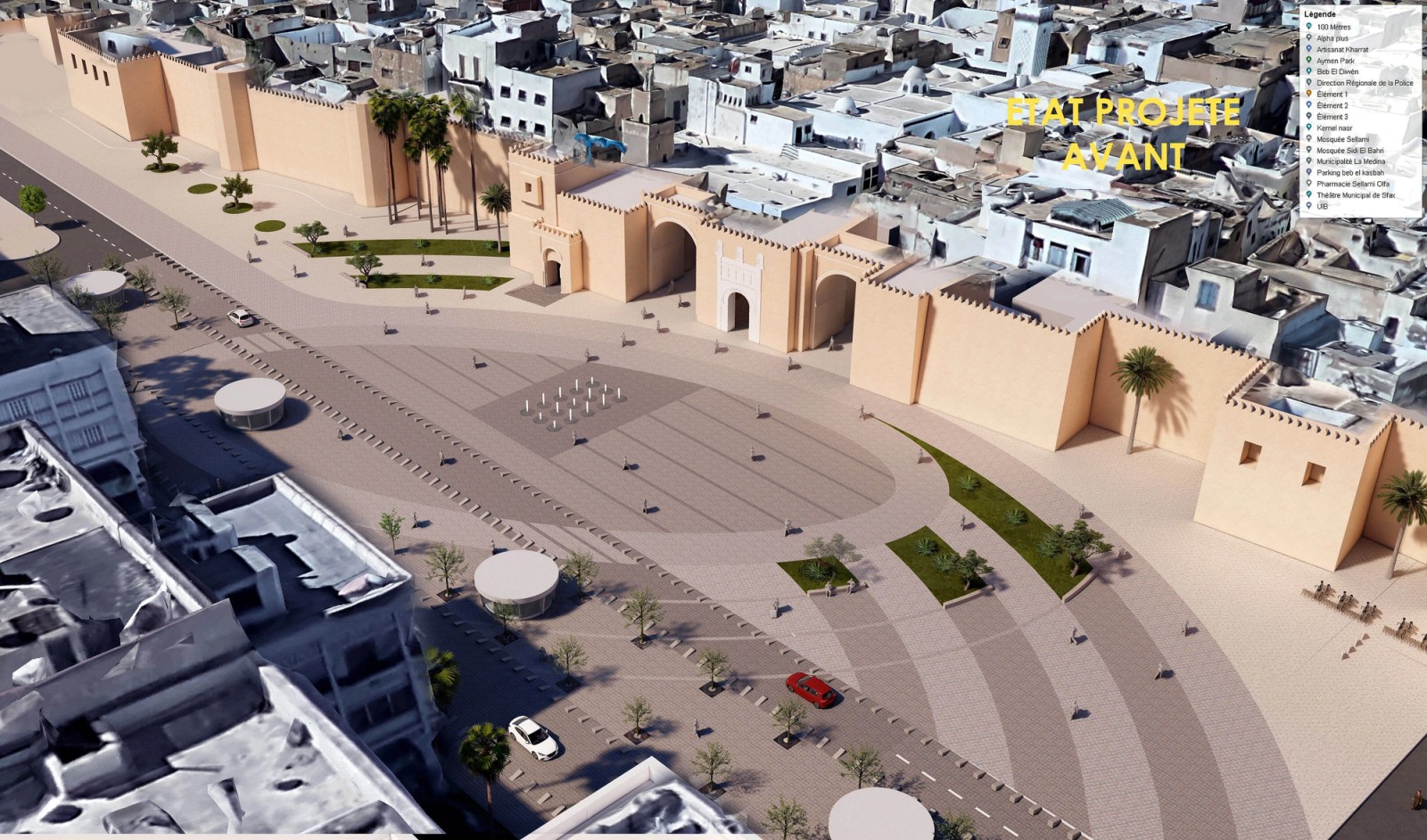
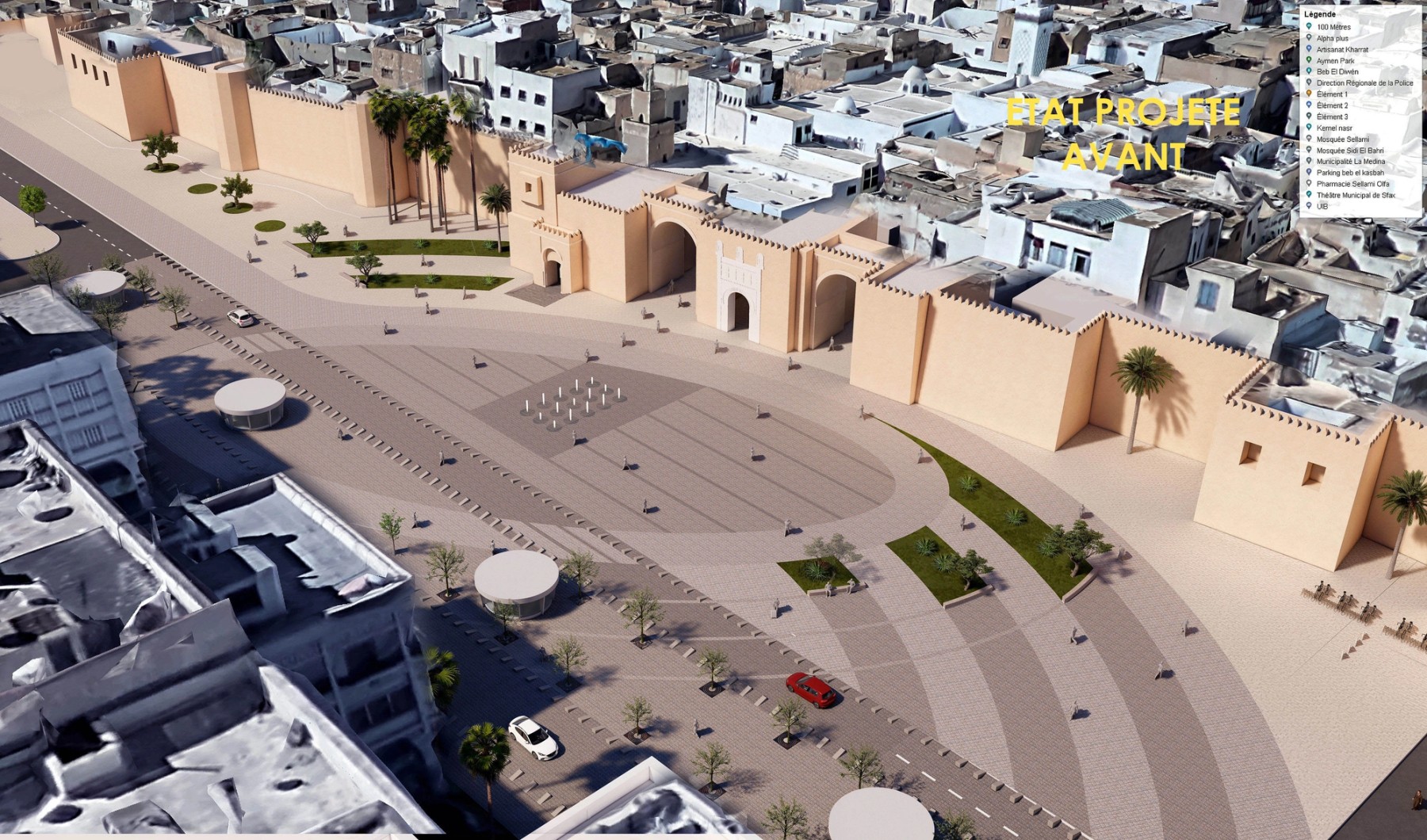
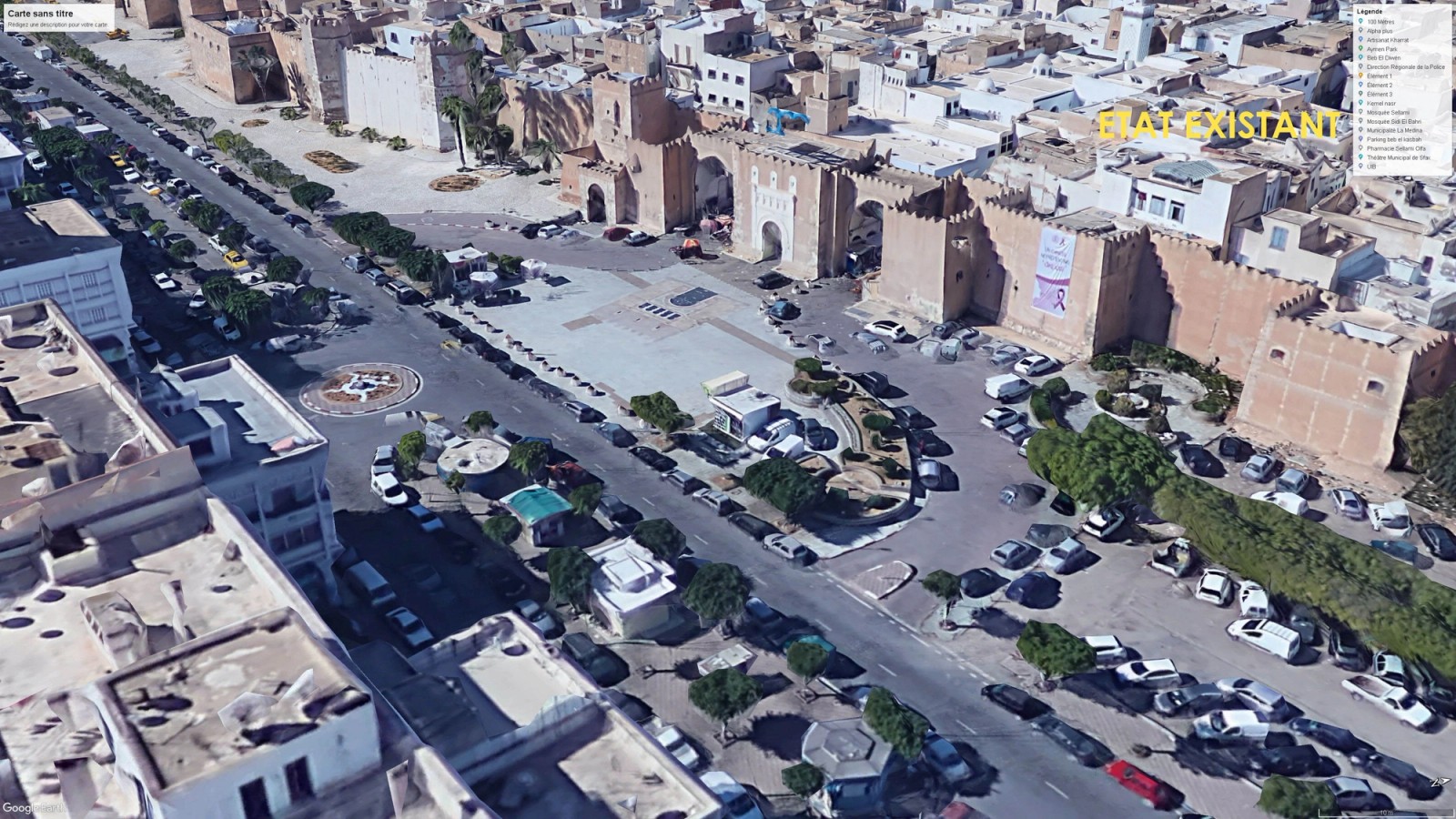
Before any nocturnal intervention, an in-depth study focused on the site’s daytime perception. The existing condition revealed a fragmented space, where historical layers, natural structures and symbolic axes had gradually become obscured. The first objective was therefore to restore the legibility of the site’s founding archetypes: the gate as a civic threshold, the ramparts as a protective line, the presence of the sea as a distant horizon, and the square as a place of gathering, pause and transition.
This reading highlighted several essential principles that guided Atelier dada’s contribution.
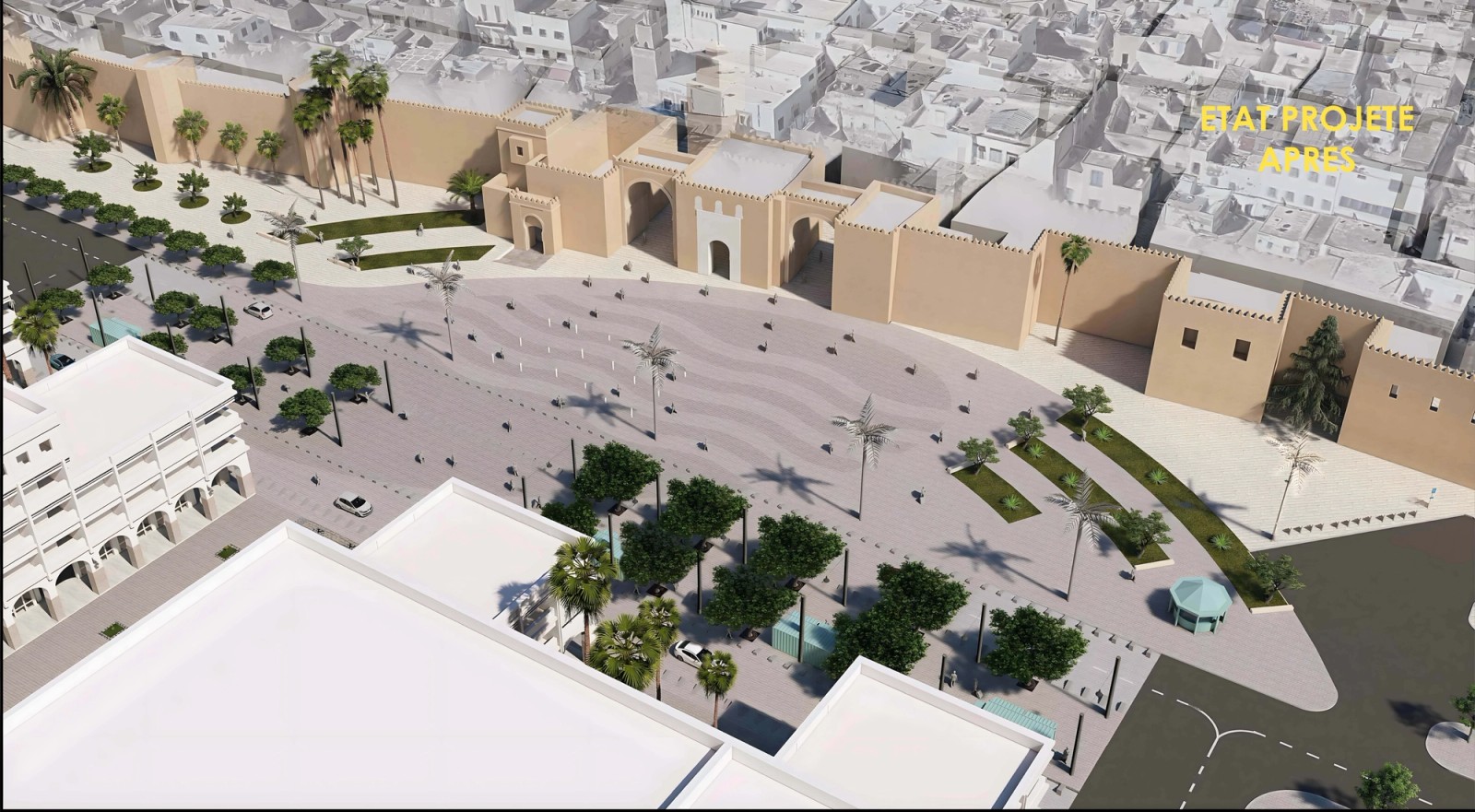
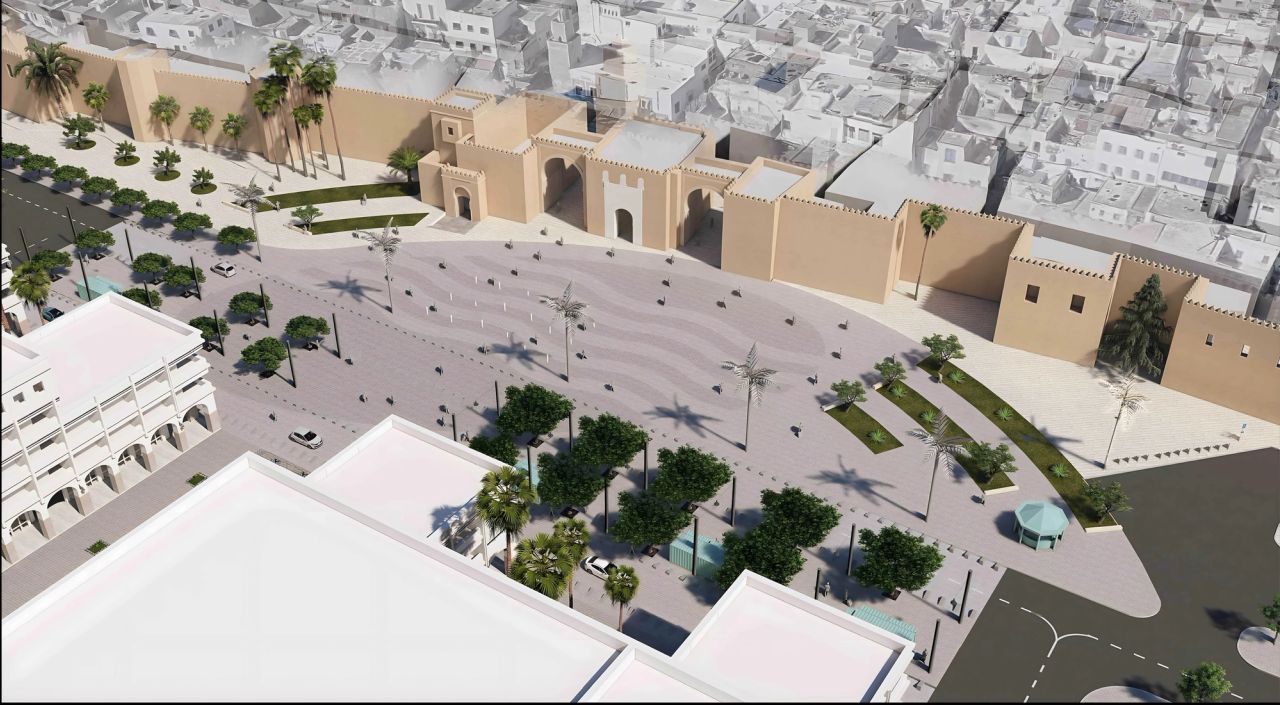
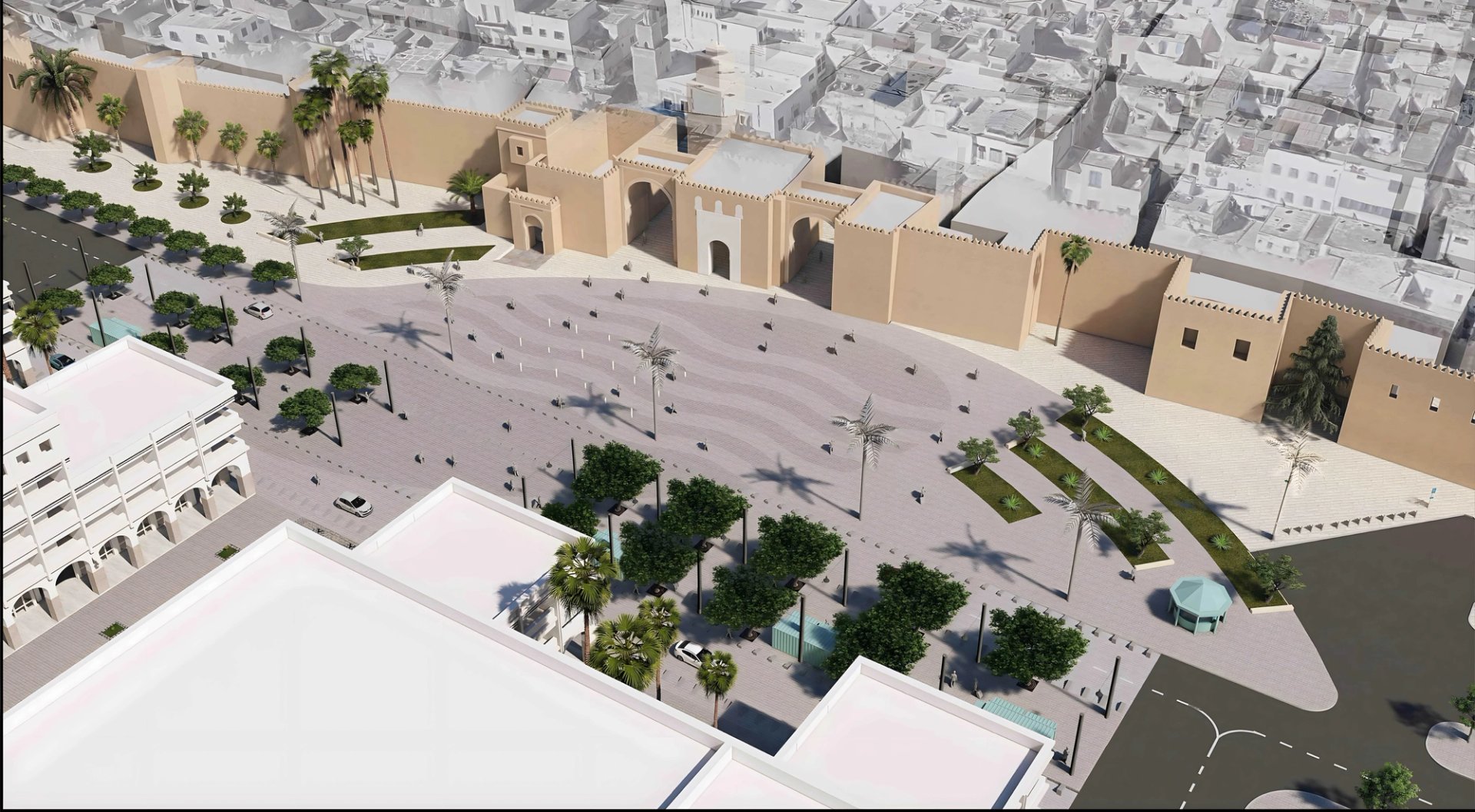
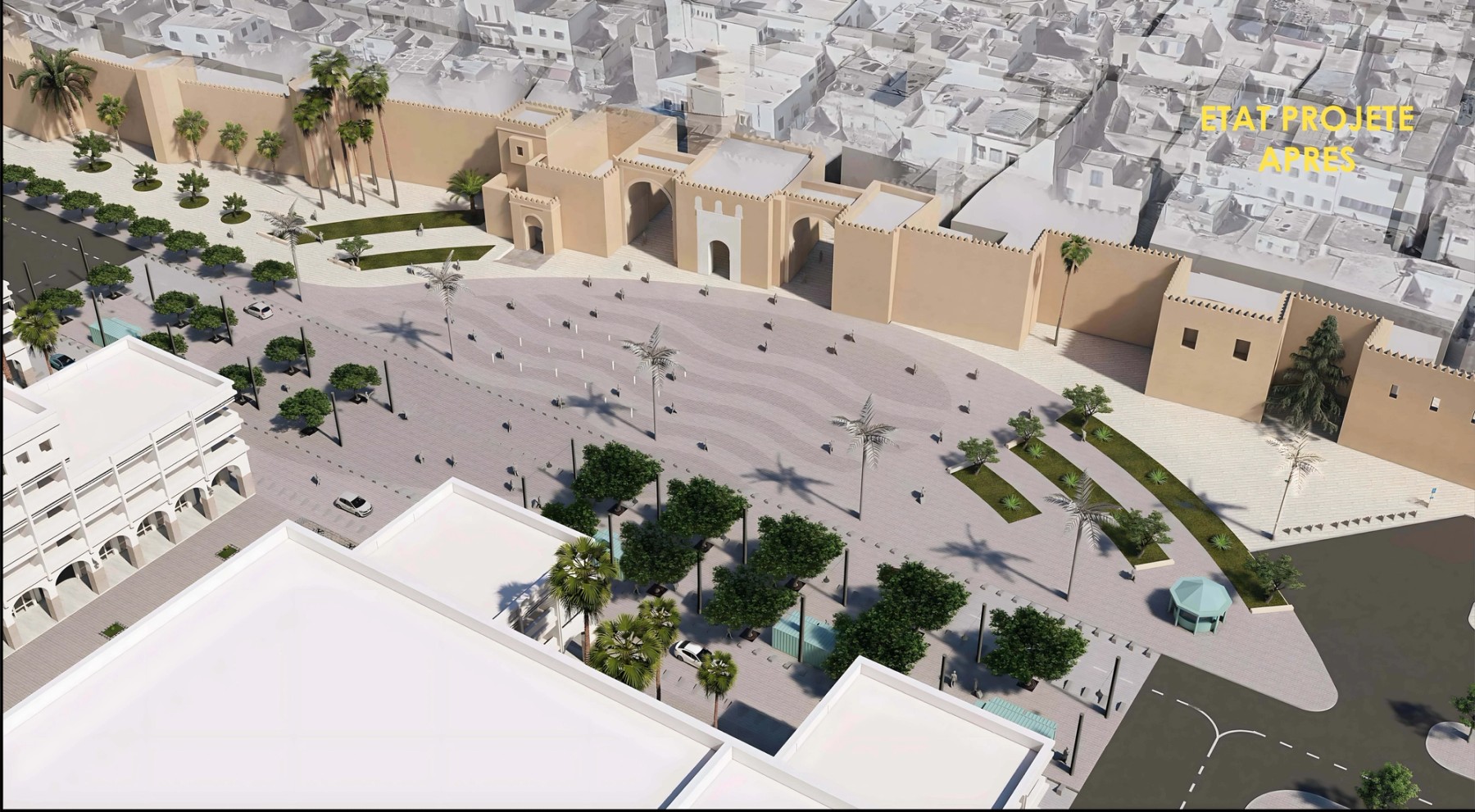
A first principle concerned the existing alignments of historic trees along the mail and across the square. These trees form a living heritage, structuring space, memory and climate. Preserving them was not only an ecological necessity, but a cultural and urban one. Their shade, already precious in an arid context, was reinforced wherever possible to protect users from intense sun exposure and to reaffirm the role of vegetation as a natural regulator of public space.
A second principle addressed the reopening of long-distance perspectives. Over time, the historic east–west axis of the mail had been progressively obstructed by the accumulation of informal kiosks. Atelier dada advocated for restoring this perspective, allowing the square to once again connect visually with the city’s major developments, particularly toward the east, where the future urban center will emerge in dialogue with the sea. This gesture repositions Beb Diwan as a hinge between past and future, medina and expansion.
A third principle focused on uses and built elements. Rather than reproducing fixed kiosks devoid of identity, Atelier dada proposed transforming these occupations into a regulated, lighter and reversible system: permanent food trucks aligned with the historic trees. Conceived from recycled port containers, sourced locally from the port of Sfax, these structures anchor the project in the city’s maritime and commercial identity, Sfax being one of the country’s major commercial ports.
This approach combines reuse, climate awareness and cultural continuity. It supports a curated promenade offering local gastronomy, artisanal products and floral kiosks, while recalling the spirit of historic gardens and vanished urban traditions. The mail thus becomes a sensory, ethical and local experience, rooted in the economy, memory and material culture of Sfax.
Within this reorganization, a key element was the redefinition of the tourism office (Diwan Assiyaha). Initially positioned within the mail, Atelier dada recommended relocating it onto the square itself, giving full meaning to the idea of a “Diwan Square” or “Gate of the Diwan.” Conceived as a vernacular architectural object and placed along the parking edge to facilitate access for tourist buses, this element becomes a civic marker rather than an obstacle, reinforcing the square’s role as an urban threshold.
Together, these principles informed a daylight reconfiguration that restores clarity, dignity and coherence to the site. Proportions, voids, alignments and rhythms were rebalanced, preparing the ground for future layers of intervention. Certain vertical structures, inspired by the local landscape, were conceived as hybrid supports, both urban and symbolic, capable of accommodating multiple functions and future narratives.
This daytime “before / after” approach constitutes a fundamental foundation of the project. It illustrates how Atelier dada’s contribution extends beyond lighting design alone, engaging in a sensitive, contextual and climatic rereading of public space, in dialogue with history, nature and contemporary uses.
Further developments related to the lighting concept, multifunctional elements and the nocturnal enhancement of the square, roadways and ramparts will be revealed at a later stage.
Readers are invited to stay connected to follow the next chapters of this transformation.
1