Lavis de lumière — Research
Looking at Paris at Night. A Manifest White Paper, 2021
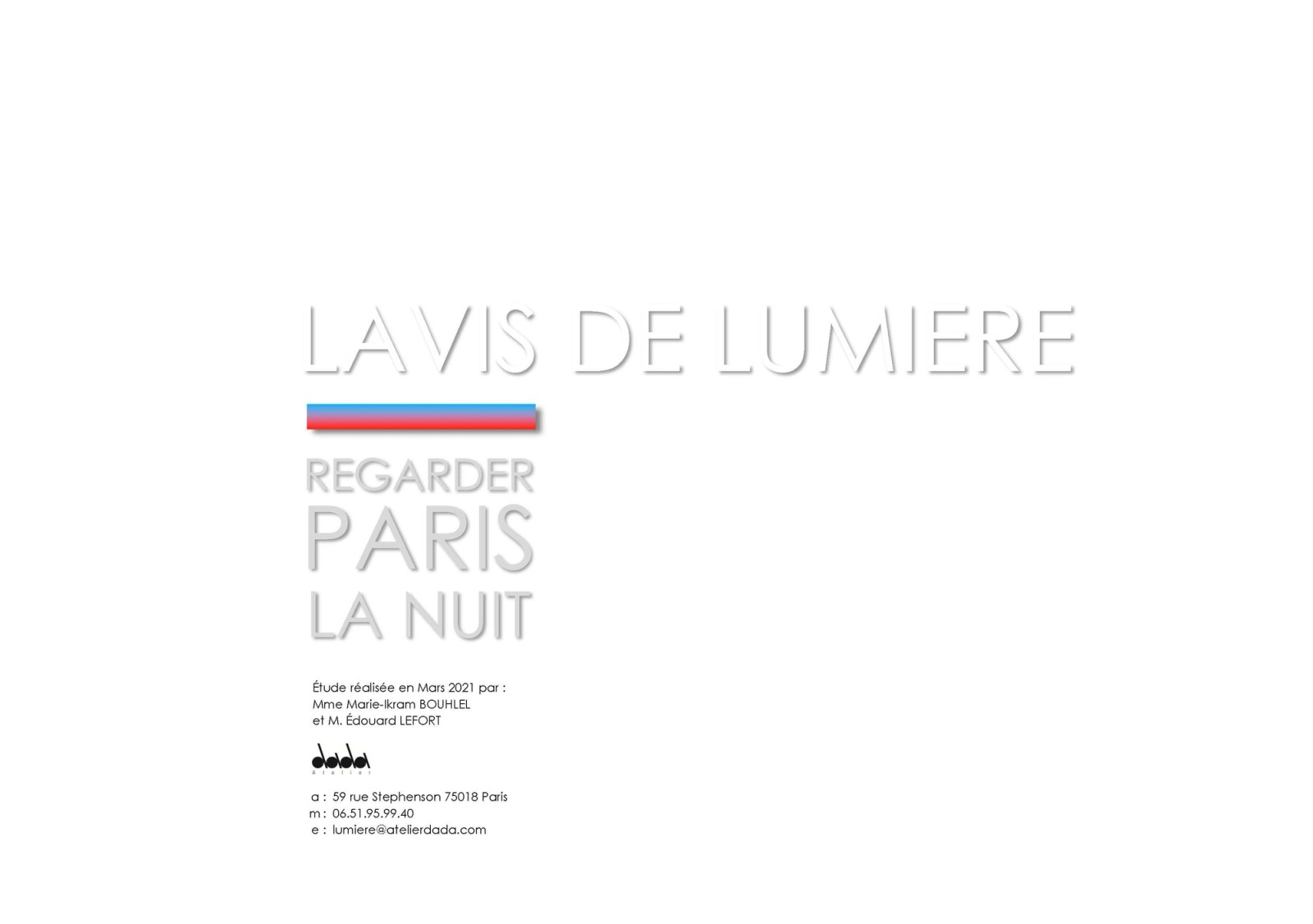
Published on March 31, 2021, Lavis de lumière – Looking at Paris at Night is a research white paper developed by Atelier dada, rooted in a fundamental belief: the urban night is not merely a staged image of façades or monuments, but a space of relationships, uses, presences, and sensitive continuities.
This work proposes a shift in perspective. It moves away from purely iconic approaches that long dominated urban lighting strategies, and instead explores light as a medium capable of reweaving living links between inhabitants, architecture, and nocturnal territories.
Within this framework, Paris emerges as a singular field of exploration. Its morphology, architectural heritage, historical layers, and urban rhythms call for a specific, attentive, non-spectacular approach. Lavis de lumière thus takes shape as a contextual response, both conceptual and technical, designed to reveal the city through subtle layers, gradations, and pauses rather than visual emphasis.
The lavis is not an end in itself, but one tool among others serving a broader vision: that of light as a means to accompany, connect, and render perceptible urban continuities, without ever imposing a single narrative.
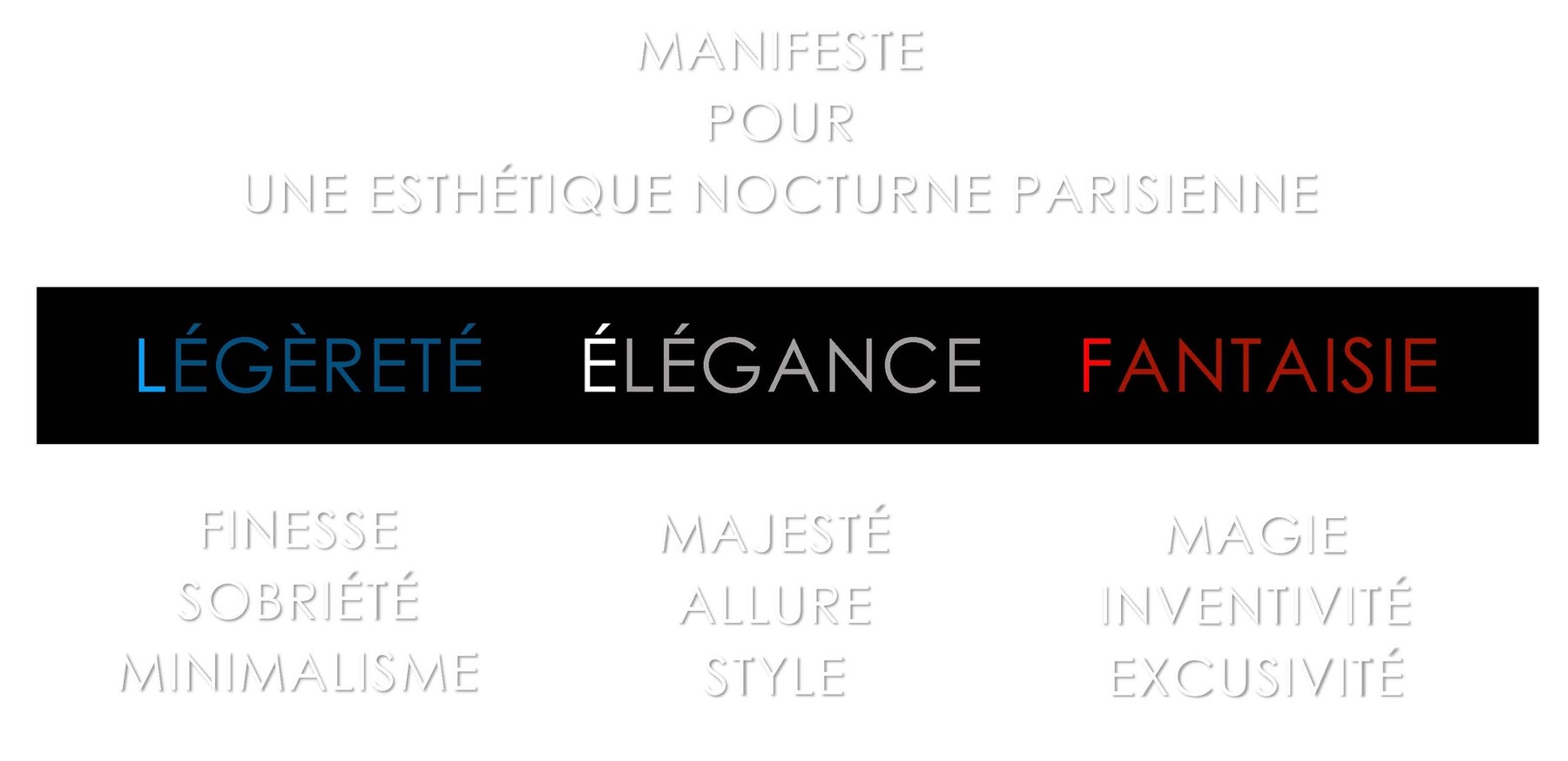
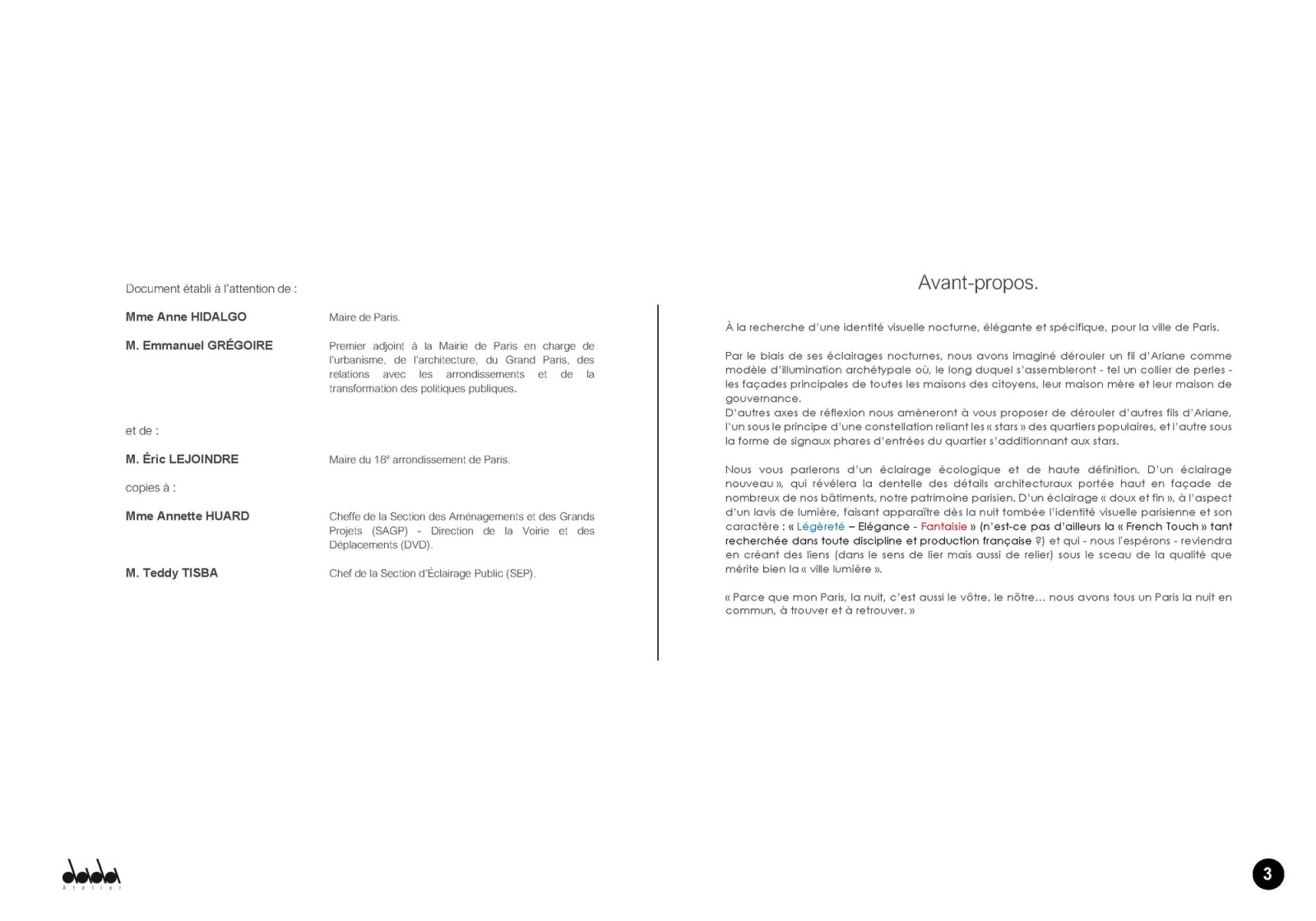
The pages presented here, extracted from the original document, form a manifesto. They establish the foundations of a living research process, nourished by projects, experiments, and a sensitive reading of the nocturnal city.
The conception of this white paper, its founding ideas, and its strategic orientation are authored by Marie-Ikram Bouhlel. Writer-architect Édouard Lefort contributed to the editorial structuring and refinement of the text, offering a valuable external perspective to this research.
**The elements presented here are excerpts from a broader conceptual and sensitive research, subject to formal protection.
The underlying principles, methods and non-disclosed devices remain protected and may not be reproduced, applied or transposed outside their context without the direct involvement of the author.
1
PREVIOUS PROJECT
Light, Use & Sustainability — Research
NEXT PROJECT
A—L’Infini
PREVIOUS PROJECT
Light, Use & Sustainability — Research
NEXT PROJECT