The Hive — Saint-Maur-des-Fossés
Urban Lighting Study – A Prospective Vision
How can light guide and connect, without overwhelming or standardising urban spaces?
Conducted between 2009 and 2010, this urban lighting study for the City of Saint-Maur-des-Fossés was conceived as a global, sensitive and forward-looking reflection, at a time when comprehensive lighting masterplans were still relatively uncommon in many French municipalities.
Developed in collaboration with Jean Sabatier, acting as AMO within Lumière urbaine, the mission aimed to support the local authority in understanding both its existing nocturnal landscape and its long-term lighting potential.
The study was grounded in a sensitive urban analysis, combining:
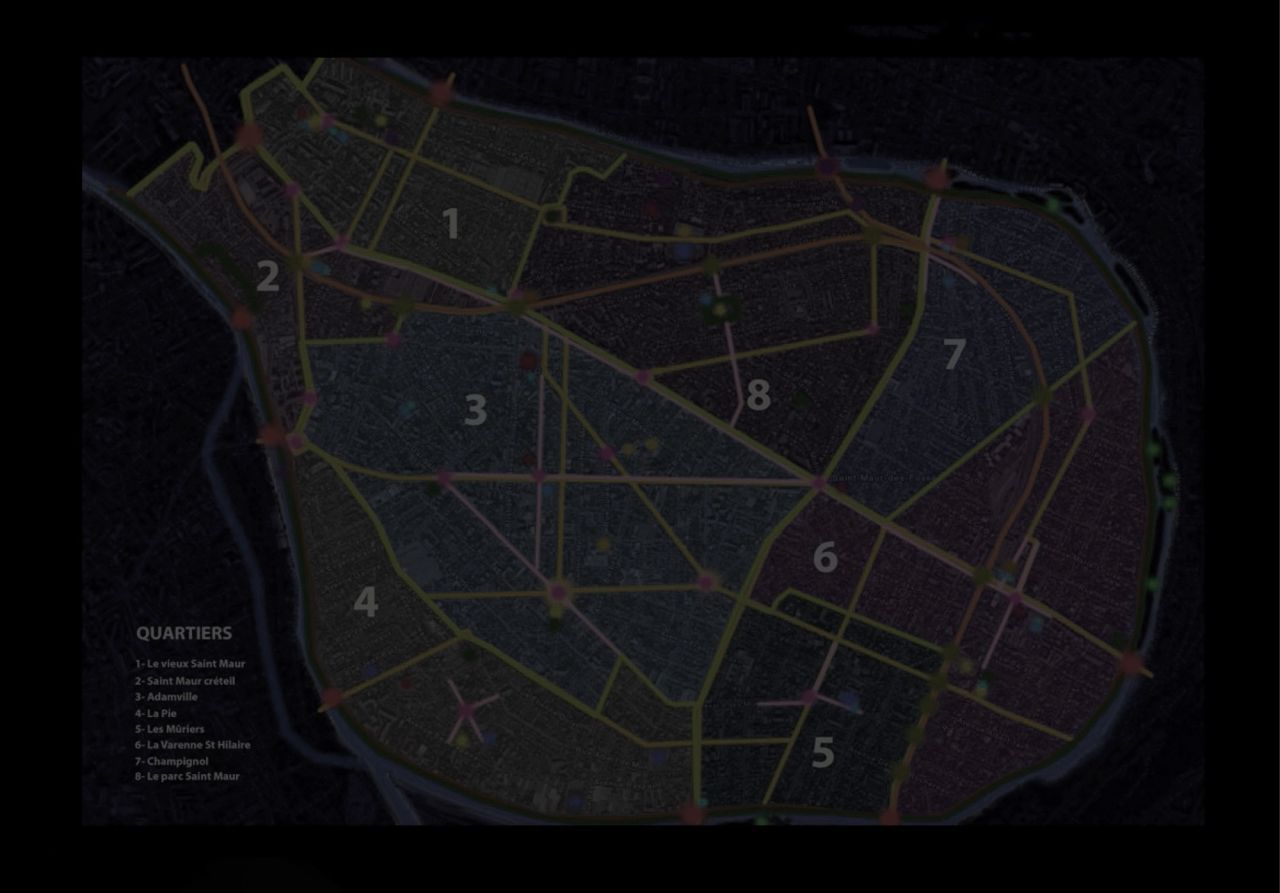
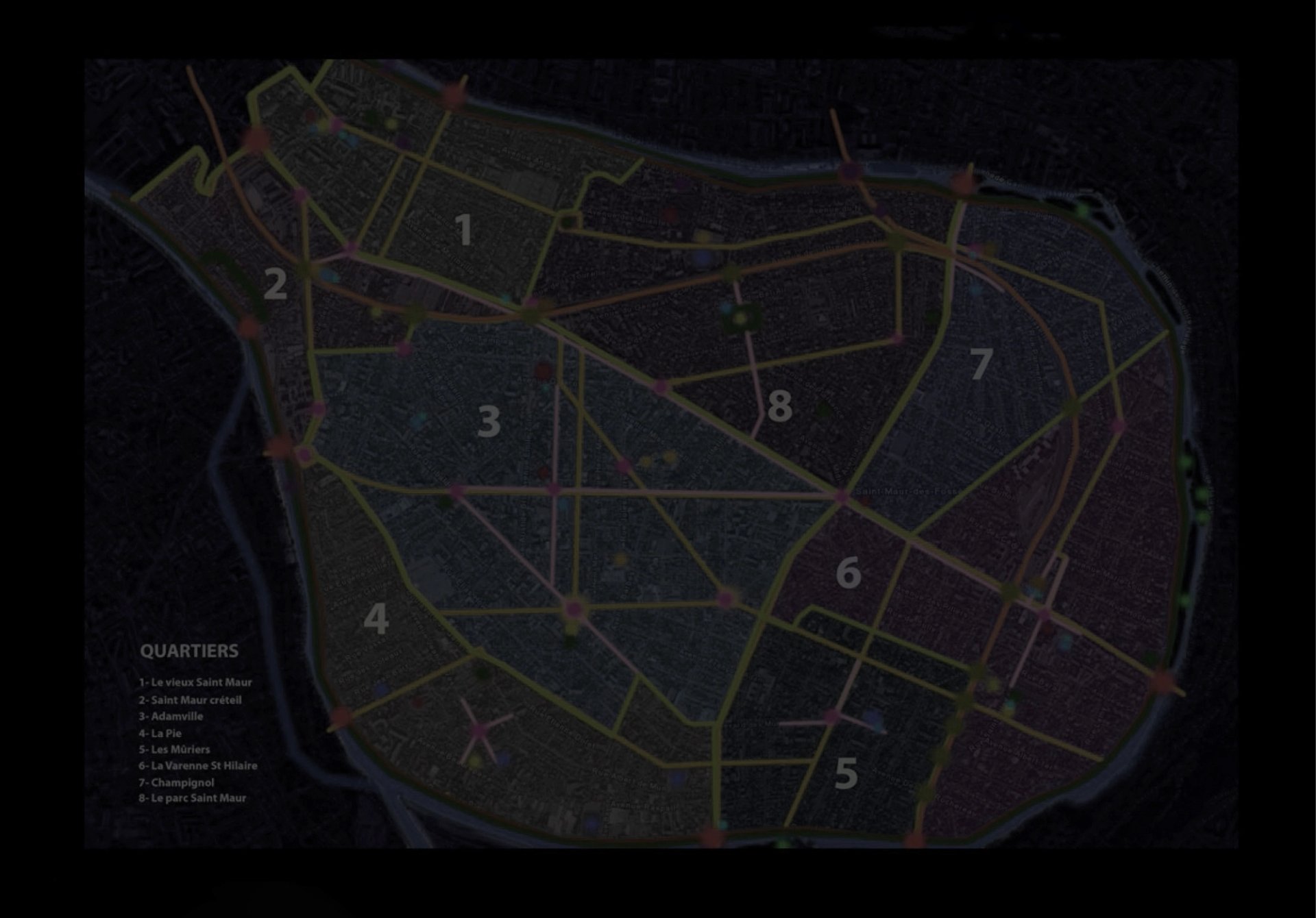
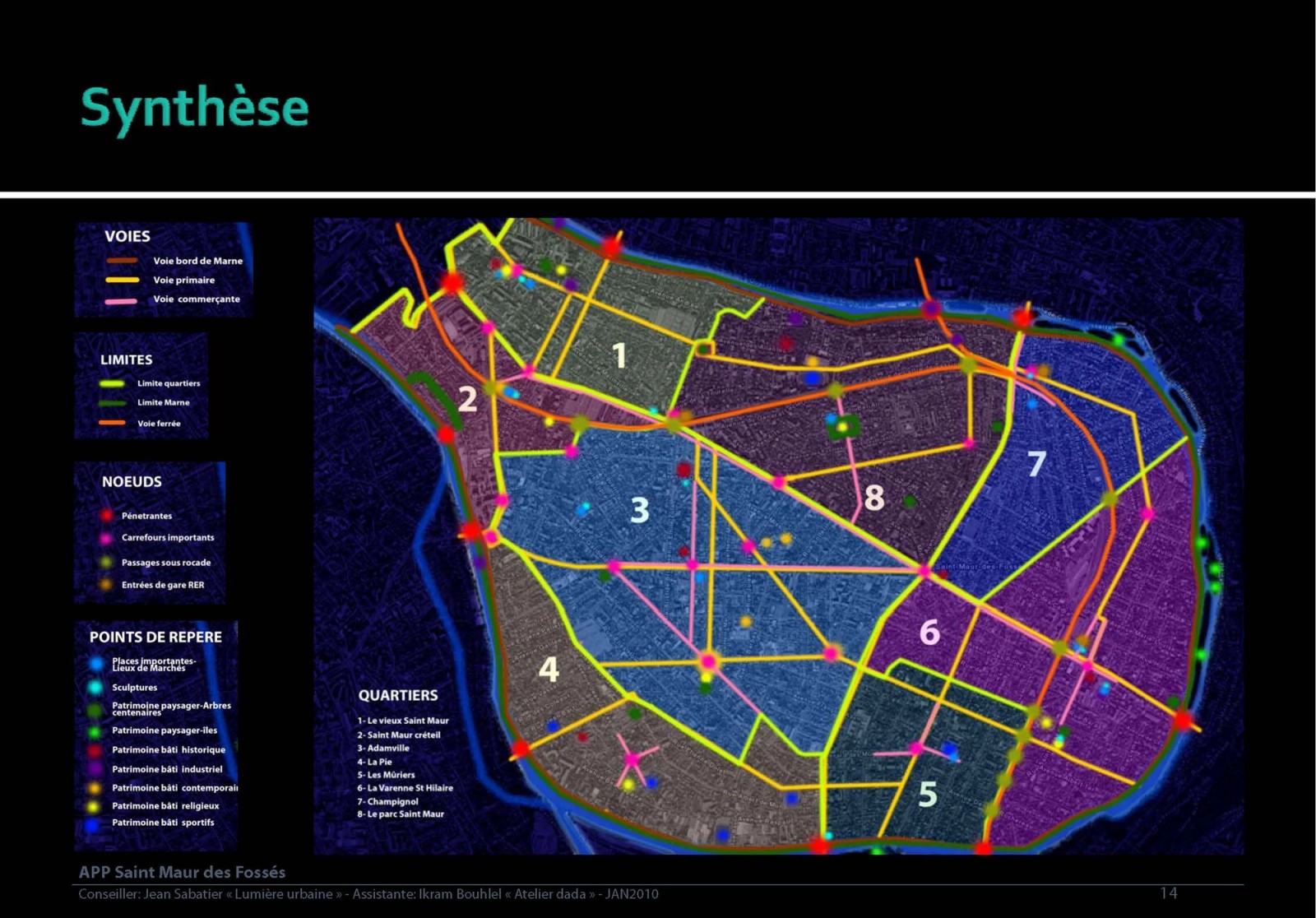
– the territorial structure (peninsula condition, natural boundaries, bridges and major axes),
– a constellation of neighbourhoods with distinct identities,
– nocturnal uses, movement patterns, nodes and landmarks,
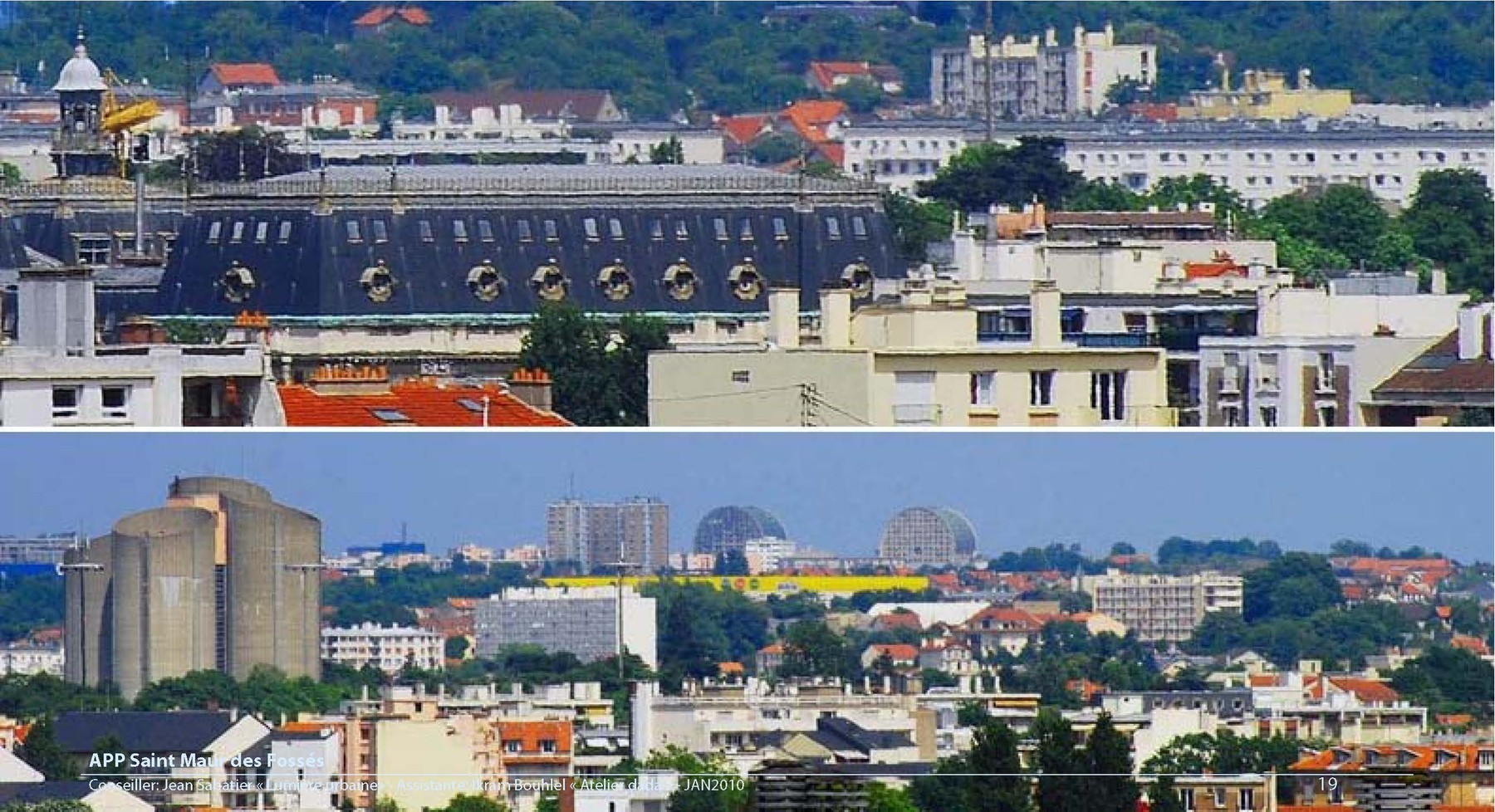
– the richness of architectural, landscape and vegetal heritage, particularly along the Marne riverbanks.
Rather than proposing a single lighting model, the approach advocated a carefully articulated hierarchy of light, based on legibility, orientation, diversity of atmospheres and respect for context.
Each neighbourhood was considered as a singular entity, encouraged to develop its own nocturnal character, while remaining connected to the whole through coherent luminous continuities.
The study also laid the foundations for a lighting governance framework:
– rationalisation of the existing lighting stock,
– control of commercial lighting,
– selection of durable and efficient light sources,
– reduction of light pollution,
– adaptation of lighting levels and operating modes according to uses, seasons and events.
More than a catalogue of technical solutions, this work constituted a strategic vision, inviting the city to consider light as a cultural, social and environmental tool, capable of strengthening the sense of place, enhancing nighttime quality of life and shaping a coherent urban image after dark.
A foundational study that continues to inform Atelier dada’s approach to urban lighting today:
a light that is structured, contextual and evolving, designed first and foremost for inhabitants, before being reduced to a technical object.
PREVIOUS PROJECT
Lights of Heritage — CCBTA
NEXT PROJECT
The Brassicole's Sparkle
PREVIOUS PROJECT
Lights of Heritage — CCBTA
NEXT PROJECT