ROOFTOP PIXEL GARDEN
Shree Balaji Heights Commercial Tower · Vegetal media architecture · India
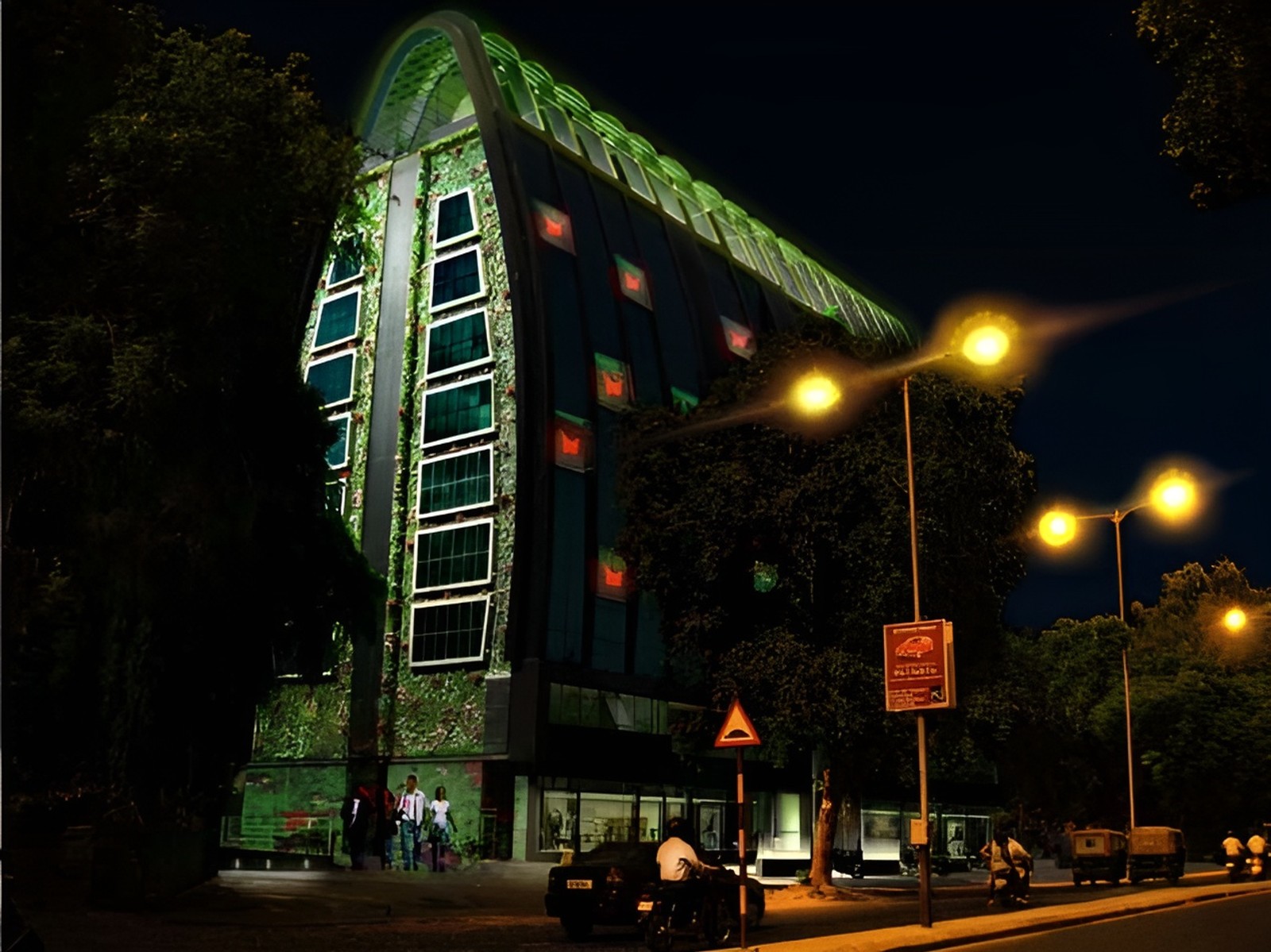
In 2013, Atelier dada was commissioned to design a lighting intervention for Shree Balaji Heights, a mixed-use commercial tower developed by the Shree Balaji real estate group.
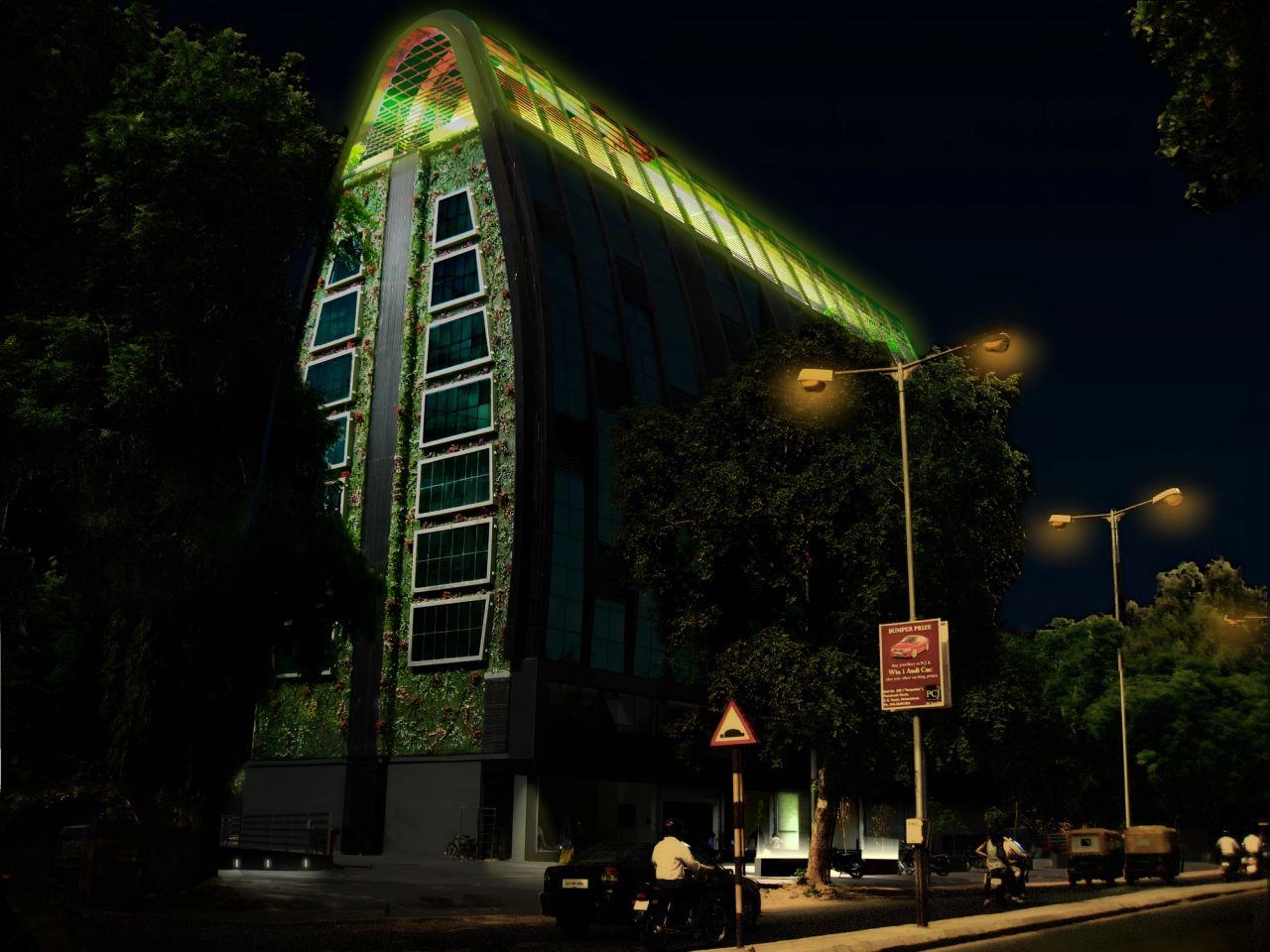
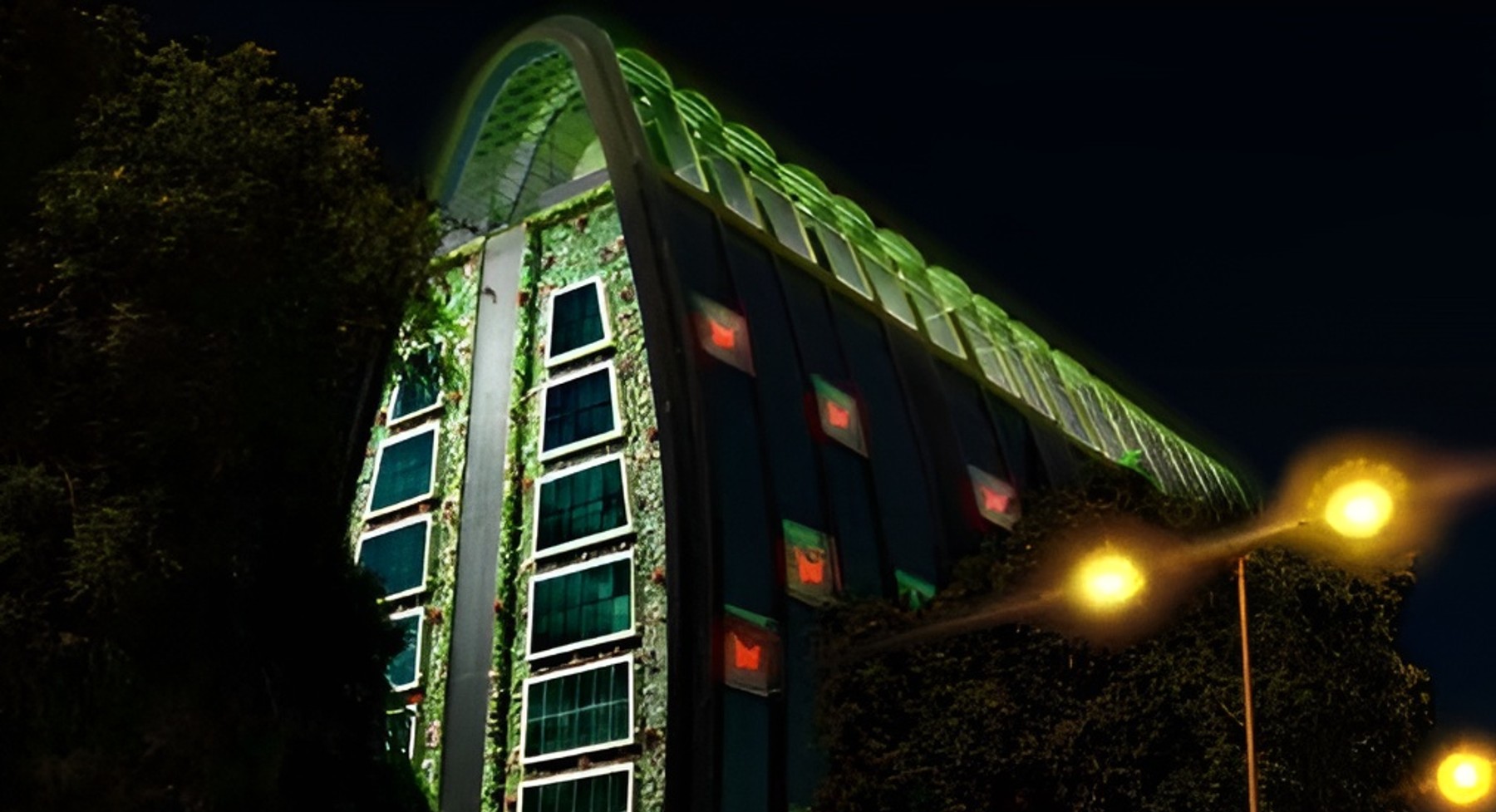
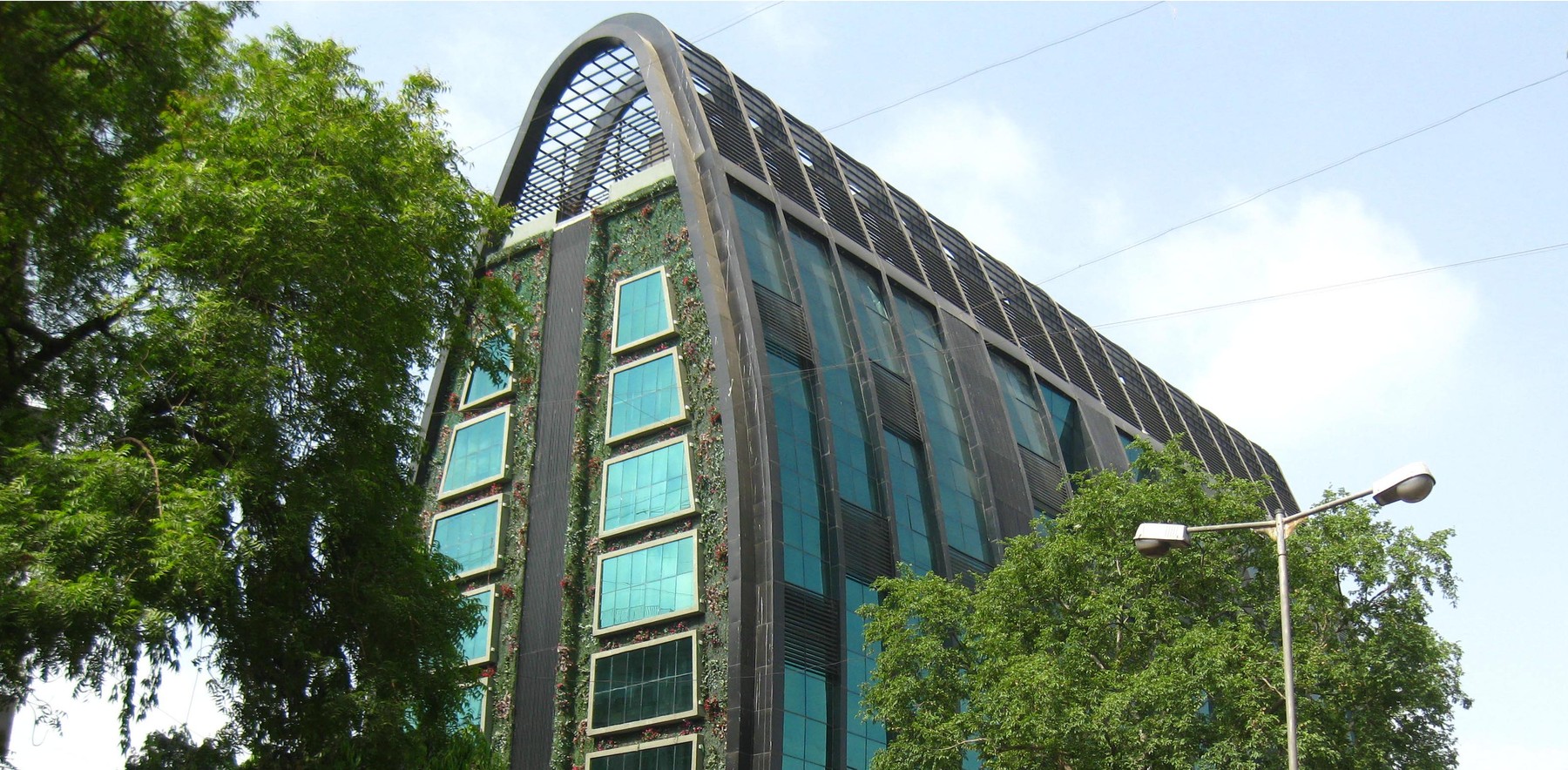
The initial request focused on enhancing the artificial green walls installed on the tower’s two lateral façades, with the ambition of turning the building into a recognizable urban marker within a dense high-rise context.
Designed at a time when media architecture was still emerging, the project anticipates a new way of connecting light, architecture and urban perception.
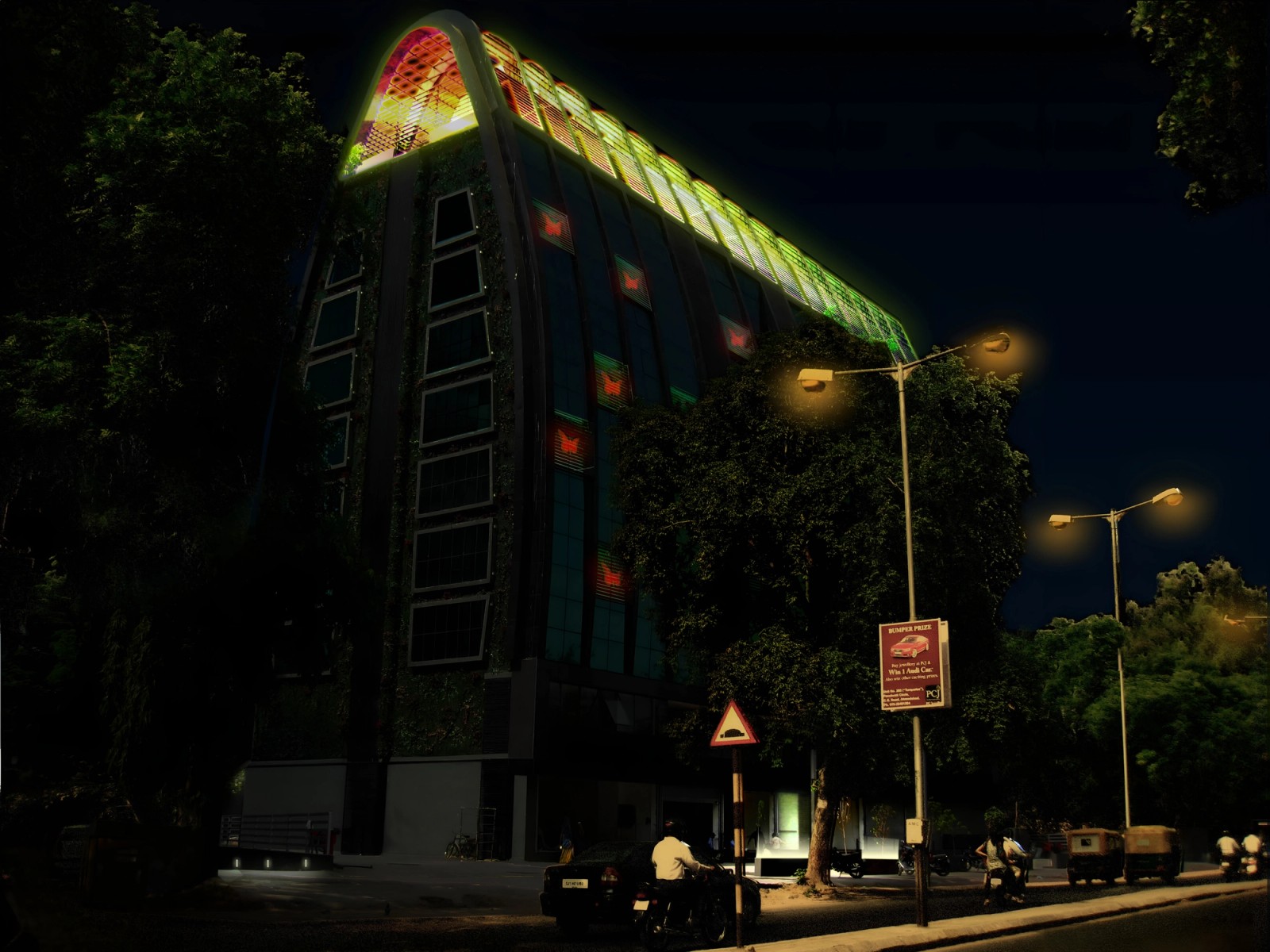
Through site analysis, visibility studies and programmatic understanding, Atelier dada quickly expanded the scope of the project. The presence of a restaurant located on the terrace, at roof level, revealed a key perceptual opportunity: at long distance, the lateral façades fade, while the metallic envelope of the restaurant terrace remains the most legible architectural surface.
This reading gave rise to the concept Rooftop Pixel Garden.
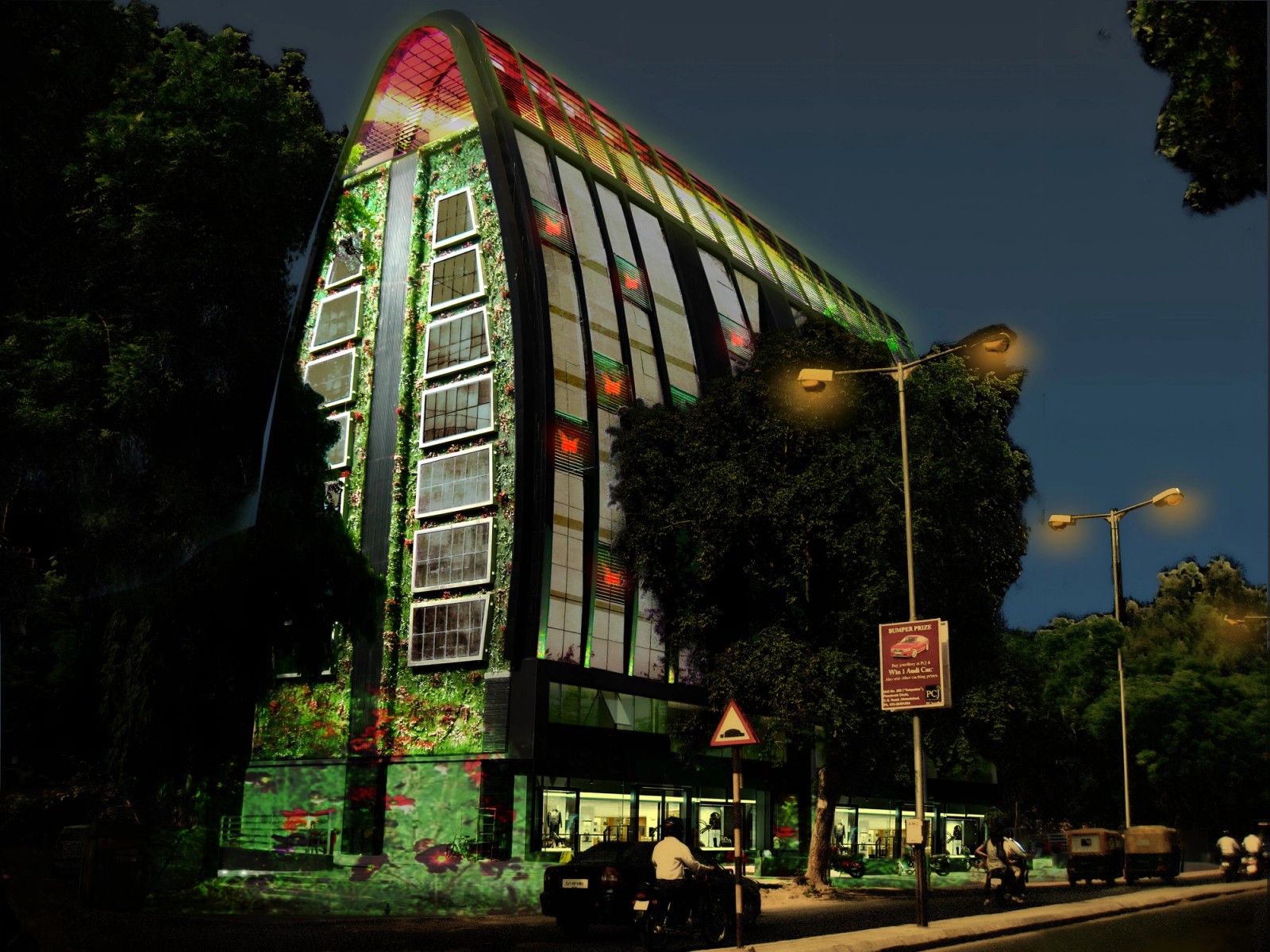
A virtual luminous garden unfolds across the restaurant terrace through a network of digitally controlled LED pixels, programmed pixel by pixel and animated by vegetation-inspired dynamic scenarios. The terrace becomes a living nocturnal landmark, anchoring the tower within the city’s nighttime skyline.
The intervention extends to the building’s longitudinal street façade, where the sunbrakers grills are transformed into a media architecture skin, also equipped with programmable LED pixels. These surfaces operate in visual synchrony with the luminous rooftop garden, reinforcing a cohesive and immersive architectural narrative.
At ground level, within the commercial center, Atelier dada introduces an immersive video projection, covering both non-vegetated wall surfaces and surrounding floor areas. This interactive layer enhances the visitor experience, translating the vegetal theme into a sensory, dynamic and perceptual spatial journey.
Rooftop Pixel Garden embodies an early exploration of meaningful media architecture, where light, movement and storytelling transform architecture into a living interface—one that communicates with the city, its users and its rhythms.
1